November 23, 2026
Spare key, roadside assistance, or locksmith for car access
By @practicaldoorcare
When you find yourself locked out of your vehicle, the first question is often which option to reach for. A spare key kept in a wallet, a roadside assistance plan you pay for every month, or a call to a mobile locksmith who can arrive at your location. Each route has its own strengths and its own limits, and knowing how they compare can save you time, frustration, and unnecessary expense.
The spare key approach
Carrying a spare key might sound like the simplest solution. A second key fob or a traditional metal key stored in a bag, a pocket, or even a magnetic box hidden somewhere on the vehicle can get you back in quickly. The advantage is obvious: no waiting, no phone call, no fee. You just unlock the door and drive.
But spare keys come with real-world complications. Modern vehicles use transponder chips, key fobs, and smart key systems that are expensive to duplicate. A replacement fob from a dealer can cost several hundred dollars, and programming it to your car isn't always something a general hardware store can do. If you lose the only spare, you are back to square one with an even smaller margin for error.
There is also the question of security. Hiding a spare key on the vehicle is a common habit, but thieves know the usual spots. Wheel wells, under bumpers, and magnetic boxes on the frame are the first places an experienced car thief checks. If you do keep a spare on the car, make sure it is a valet key that starts the ignition but does not open the trunk or the glove box, and never leave anything with your home address visible inside the vehicle.
Roadside assistance plans
Many drivers subscribe to roadside assistance through their auto insurance, a credit card benefit, or a standalone membership. The service typically includes lockout help, towing, battery jump-starts, flat tire changes, and fuel delivery. For a lockout, you call a dispatch centre, and a local service provider is sent to your location.
The main benefit is predictability. You pay a set annual or monthly fee, and lockout calls are usually covered up to a certain number per year. That can make the cost feel manageable, especially if you are prone to misplacing keys. Some plans even cover key replacement if the key is lost or broken, though that often requires an additional fee or a separate add-on.
However, roadside assistance is not always fast during peak times. A busy Friday night or a snowstorm can mean a wait of an hour or more. The technician who arrives may not carry the right equipment for your specific vehicle make. If your car uses a smart key or a keyless ignition system, a standard lockout kit might not be enough. The technician might have to call a specialist, adding more delay.
Another point to consider is that roadside assistance is tied to the vehicle or the person, depending on the policy. If you are driving a rental or a friend's car, your coverage may not apply. And if you have used up your annual call limit, a lockout can cost you a separate fee on top of the membership price.
Calling a mobile locksmith
A mobile locksmith specialises in vehicle access and key services. Unlike a general tow truck driver, a locksmith carries tools designed for non destructive entry. They can open most cars without damaging the window seals, paint, or locks. They also handle key cutting, transponder chip programming, and key fob replacement on the spot.
Speed is a strong point. A local locksmith can often arrive within 20 to 40 minutes in a city, and the work itself takes minutes once they are at the vehicle. They verify your vehicle identification and proof of ownership before starting, which is a standard security step to prevent unauthorised access. For newer vehicles with push-to-start systems, a locksmith can program a new smart key if the original is lost or broken.
Cost varies depending on the vehicle make, the type of key, and the time of day. A basic lockout on an older car with a simple metal key is usually affordable. A newer car with a key fob or a transponder chip can cost more because the key itself is more complex and the programming requires specialised equipment. Many locksmiths charge a flat fee for lockout service, with no hidden membership or annual commitment.
One thing to be aware of is that not all locksmiths carry the latest programming tools for every model. If you drive a rare or very new vehicle, it is worth confirming ahead of time that the locksmith can handle it. Most reputable locksmiths will ask for your vehicle make and year over the phone to ensure they bring the right gear.
Comparing the three options side by side
To decide which route suits you best, think about your driving habits and your tolerance for waiting. If you rarely lock yourself out and you keep a spare key in a secure place you can access easily, that option costs nothing extra and gets you moving fastest. The catch is that you have to remember to carry that spare, and you have to replace it if it gets lost or damaged.
Roadside assistance works well if you want a safety net for multiple types of trouble, not just lockouts. It bundles lockout help with towing and other services, so the annual fee can be good value if you use any of those features. But for a pure lockout, the wait time and the potential need for a specialist make it less reliable than a direct call to a locksmith.

A mobile locksmith offers the most focused solution for vehicle access. They come to you with the right tools, and they can handle key replacement and programming on the spot. The trade-off is that you pay per incident, and the cost can be higher than a roadside assistance co-pay if you have that benefit. For many drivers, the speed and certainty are worth the price.
When each option makes the most sense
If you are at home and you have a spare key inside the house, the fastest move is to retrieve it. No call, no cost, no waiting. If you are out and about and you have a roadside assistance plan with a good response time record, that is a reasonable first call, especially if you also need a jump or a tire change.
If you are in a hurry, if the weather is bad, or if your vehicle uses a modern key system, a mobile locksmith is usually the best bet. They can arrive quickly and handle the job without damaging the car. This is where the idea of mobile help for locked cars really proves its value. A locksmith who comes to you with the right programming tools can have you back on the road while a tow truck driver might only be able to open the door, leaving you to deal with the key problem separately.
For drivers who frequently lose keys or who own vehicles with expensive smart key systems, keeping the contact of a reliable locksmith saved in your phone is a practical move. You skip the middleman and get straight to someone who can both unlock the car and replace the key if needed.
What to do when you are locked out
First, check all doors and the trunk. Sometimes one door is unlocked even when others are not. If you have a physical key but the fob is dead, try the key in the driver's door manually. Some modern cars still have a hidden key slot behind a cap on the door handle.
If you are certain you are locked out, call for help. Have your vehicle identification number ready, as well as your proof of ownership, such as registration or insurance. This is standard for any legitimate service provider. It protects you and them. Do not attempt to force the door open with a coat hanger or a wedge unless you know exactly what you are doing. Modern door seals and window mechanisms are easy to damage, and a broken window costs far more than a locksmith visit.
If you have roadside assistance, call them first and ask for an estimated arrival time. If they cannot give a clear time or if the wait is too long, you can always call a locksmith as a backup. Just be aware that some roadside plans charge a cancellation fee if you change your mind after they have dispatched a truck.
Prevention tips for the future
Having a spare key is the best prevention, but only if it is stored somewhere both accessible and safe. A key box with a combination lock, kept in your wallet or purse, is a good compromise. Some drivers keep a spare at work or with a trusted neighbour. Just make sure the person who holds it knows which car it belongs to and can be reached when you need them.
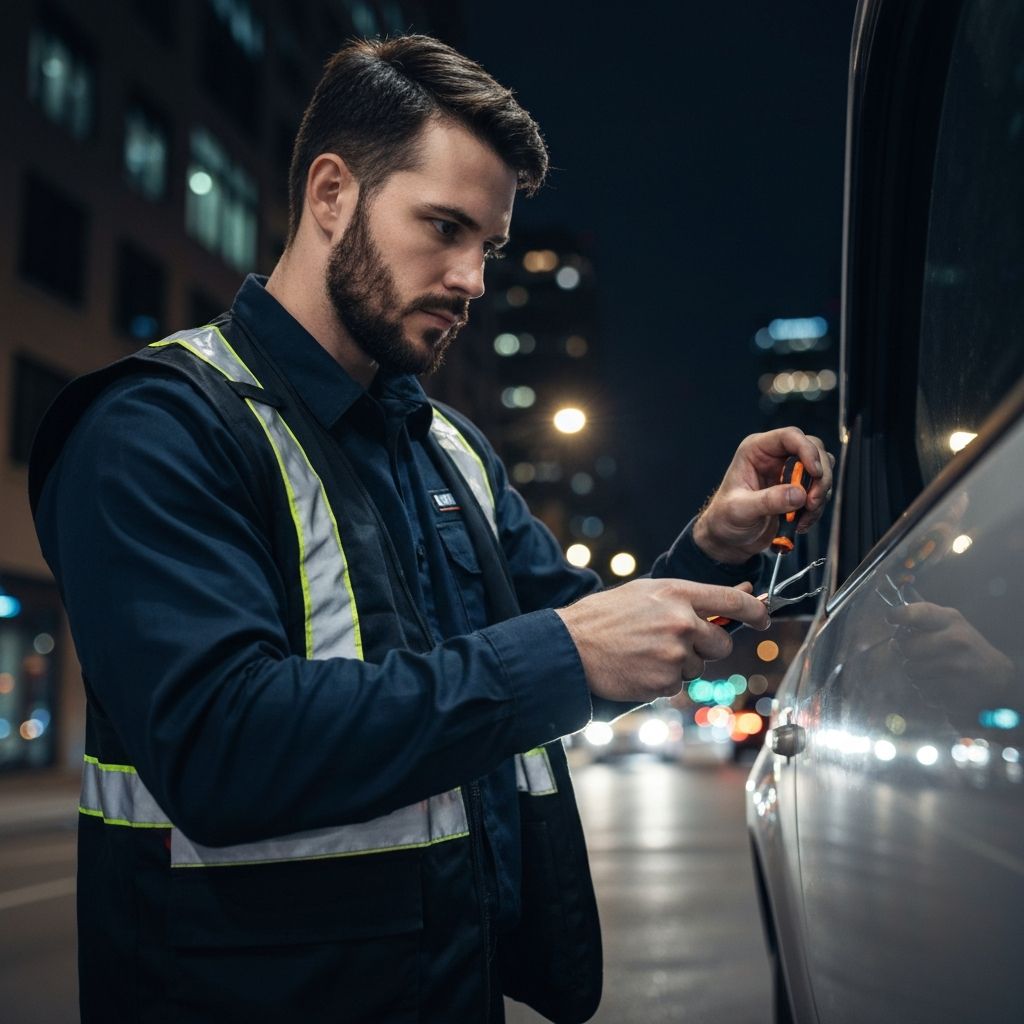
For keyless entry systems, the fob battery is a common failure point. Replace it every year or two, and keep a spare battery in the glove box. If your fob stops working, you can often start the car by holding the fob against the start button, but you still need to get inside first. That is where having a physical key hidden somewhere or a trusted mobile help for locked cars contact can save the day.
Finally, if you have a newer vehicle, ask your dealer or a locksmith about getting a backup key programmed before you need it. The cost is usually lower when it is done in advance, and you avoid the rush fee that comes with an emergency call.
Making the call
No single option works perfectly for every situation. A spare key is great when you have it and terrible when you don't. Roadside assistance offers a broad safety net but can be slow for lockouts. A mobile locksmith provides fast, specialised help that covers both access and key issues. The smartest approach is to have a plan for each scenario and to know which number to call before you are standing outside your car in the rain.
❧